
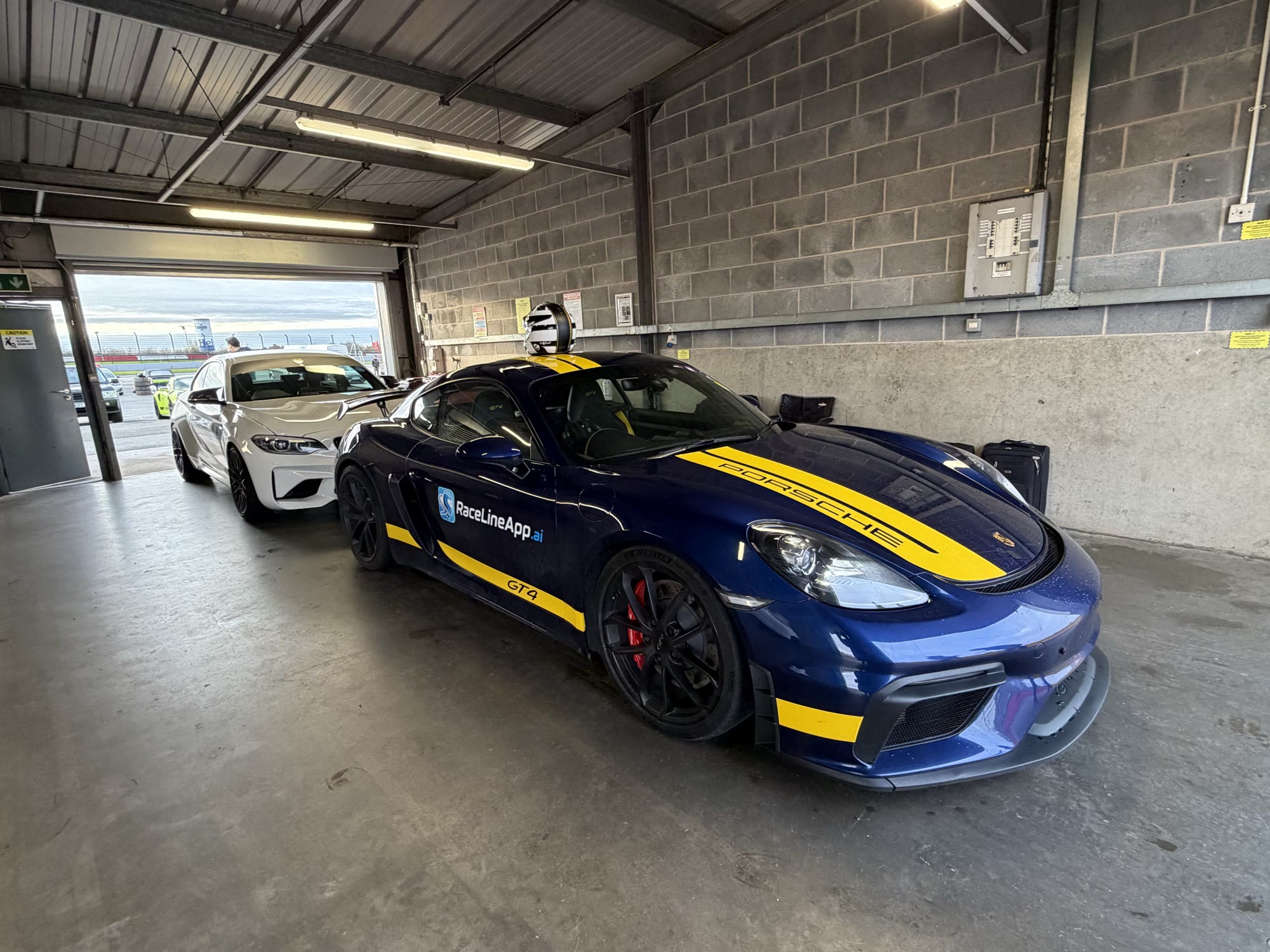
Live on the full Donington GP circuit
On 20 November we took RaceLineApp.ai back to Donington Park and ran the live cues on the full Grand Prix circuit for the first time, on a cold November day with good coaches and good friends.
The day at a glance
- When
- Friday 20 November 2026
- Where
- Donington Park Grand Prix circuit, Castle Donington, Leicestershire
- Car
- Porsche 718 Cayman GT4 on Michelin Pilot Sport 4 S
- Conditions
- Cold all day. Damp for much of the morning, then drier
- What we tested
- RaceLineApp.ai live on the full GP circuit
- Result
- Live cues on the Donington GP circuit for the first time, with two coaches in the car during the day
On Friday 20 November we took RaceLineApp.ai back to Donington Park. In October we ran live cues on the National circuit. This time we were there to run them on the full Grand Prix circuit for the first time, on a cold November day.
What was the test day for?
Track days don’t stop in winter, so our testing doesn’t either. A cold, damp circuit asks more of the driver and the car, and we wanted to take the app out in it.
It was also our first chance to hear the live cues on the GP circuit, after the National layout in October.
Who was at Donington?
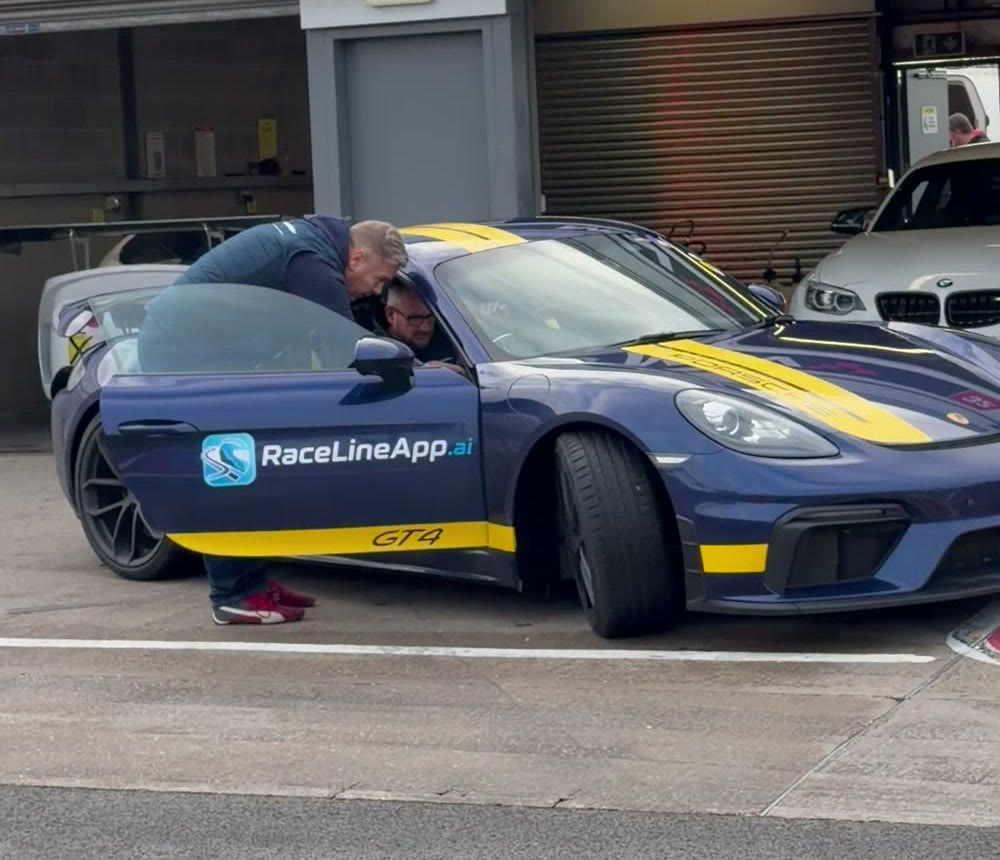
Jonathan brought the GT4 and drove most of the day’s sessions. Mark White, our Coaching Director, took the first run on his own and coached from the passenger seat. Jim Cameron, our motorsport industry adviser, coached in the afternoon.
Our friend Gareth, who drove the GT4 at Anglesey earlier in the month, rode with Mark in the late morning. Ivita filmed and photographed the day from the pit lane and the trackside.
What did we do on the day?
We had a full list for the day. Here are four things we did.
Go live on the GP circuit
The live cues ran on the full Grand Prix layout for the first time.
Run on a cold, damp track
We had the app out in the cold, in the damp and as the track got drier.
Put a coach beside the app
Mark rode with Jonathan while the cues were on.
Record real coaching
Mark and Jim both coached out loud with the cues off and the app recording.
The day in numbers
How did the day go, from damp to drier?
- Around 9:00A cold, damp start
It had been minus 4 overnight and the track surface was 4.5 C. There was time to talk by the car before the first run.
- 9:14Mark goes first
Mark took the car out on his own with the cues off and the app recording, to feel his way into a cold, damp track.
"Trying to find the grip on the circuit, trying to find where it is," Mark said on the first run. "It's cold, it's damp, new tyres, new brakes."
A few laps in, it was starting to come. "I can feel some heat building now, which is good... Just got to be a little bit patient."
Mark on the first run, filmed by the app. The GT4 on the first run of the morning. - 9:40Back at the garage
Back in for a look over the tyres.
Back at the garage after the first run. - Mid-morningA coach talking
Mark coached Jonathan out loud with the cues off, and there was time by the car between runs.
- Soon after 11Live cues on the GP
Jonathan headed out with Mark beside him and the live cues on, for the first time on the GP layout.
Jonathan and Mark on the first session with live cues, filmed by the app. - Late morningDrier, with the cues on
The track was drier. Mark went back out with the cues on and Gareth alongside.
- After lunchCues and a coach together
Jonathan went out again with the cues on and Mark in the passenger seat.
- Mid-afternoonJim's session
Jim took the passenger seat and coached Jonathan with the cues off.
Jonathan and Jim, filmed by the app. - Late afternoonPacking up
As the light went, we packed up for the day after a successful test day.
What does live coaching sound like on track?
The cues are short on purpose. In the car we heard cues such as Brake, Turn in and Power through its speakers, so there’s nothing you have to read at speed.
What did we learn?
Cold tracks ask for patience. Before Mark’s first run the tyre tread read between 5 C and 8 C on the thermal camera. After eight laps at pace and a cool-down lap, the average readings across the four tyres were between 22 C and 33 C. On a cold, damp track you build up to the grip bit by bit, and there’s no prize for rushing it.
There’s more to refine in where the cues come. A full day on the GP circuit, with two coaches in the car, showed us how we can refine where the cues come, and we’re working on it now.
The grip window was smaller on the damp track. We compared what Jonathan used in the damp morning with what he used once the track was drier, in the same car on the same tyres. Every damp lap used less grip than every drier lap, and the whole window was more than a quarter smaller. The difference was there at all eight corners.
Grip circles show how each of us uses the grip. After the day we drew grip circles for Mark, Jonathan and Jim at Old Hairpin. Braking is at the bottom, cornering is to the side and power is at the top. The dot shows how the grip is shared as the car goes through the corner. On a typical lap here, Mark and Jim both spent a larger share of the corner slowing and turning together than Jonathan did. The days, tyres and track conditions weren’t the same, so it’s not a ranking.
Other cars change the picture. The debriefs set aside 118 of 272 corner passes, more than four in ten, because a car was close ahead on camera or the pass looked held up. A slow pass behind another car says little about the driver, so it helps to know where the traffic was.
One corner can tell more than one story. Most of the debriefs from sessions with flying laps had at least two corners where more than one thing came up. At Fogarty Esses in the early afternoon, Jonathan’s braking point moved by 77 m from lap to lap, the debrief marked three laps as braking early, and on the four slowest laps the slowest point was typically 45 mph, against 52 mph on the best pass. Reading those together tells us more than any one of them.
More laps make a better debrief. In the shorter sessions, once the corners that looked affected by traffic were set aside, some findings showed on only one lap of that session, and the debrief used the driver’s other sessions that day to back them up. Longer runs give the app more to compare within one session.
The debrief and the grip circles answer different questions. The debrief says where a pass differed from the driver’s best through that corner, and what to try. The grip circles show how the car was being used on the way through. Side by side, with what the coach said, they give three views of the same corner.
One day can give you several tracks. It was cold from start to finish, damp for much of the morning and drier by late morning, with patches still there in the afternoon. A day like that gives us recordings across very different conditions on the same circuit, in the same car.
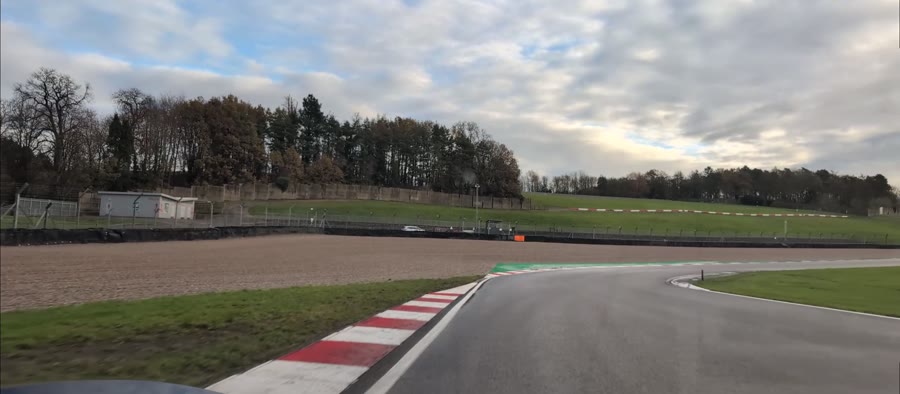 9:24Damp
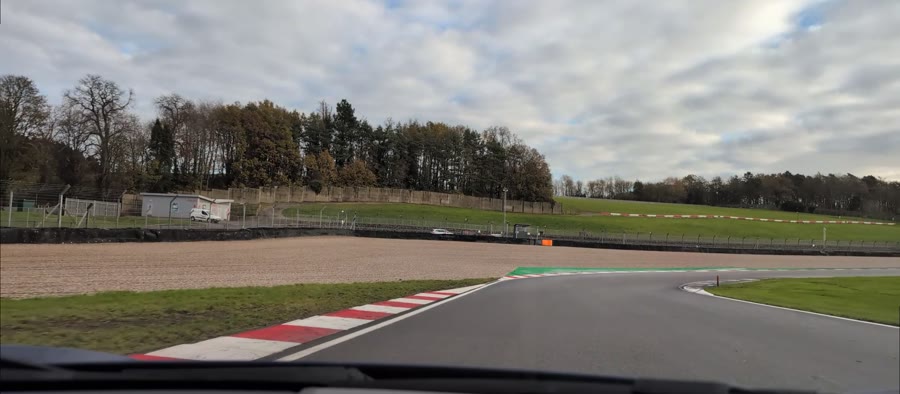 10:44Damp
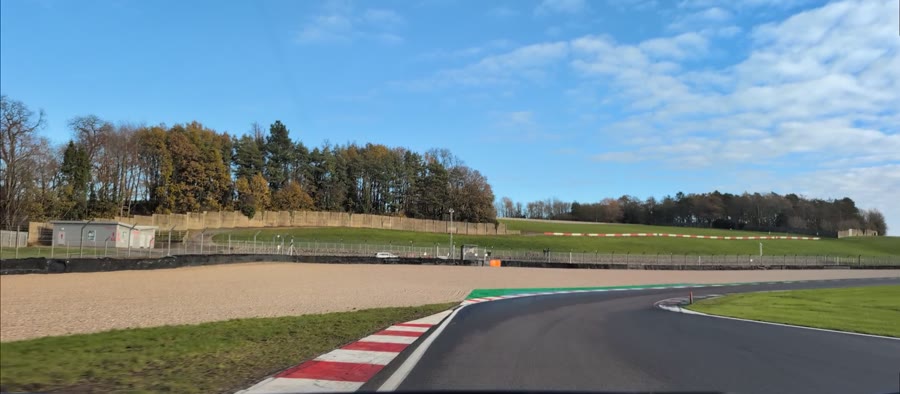 11:57Drier
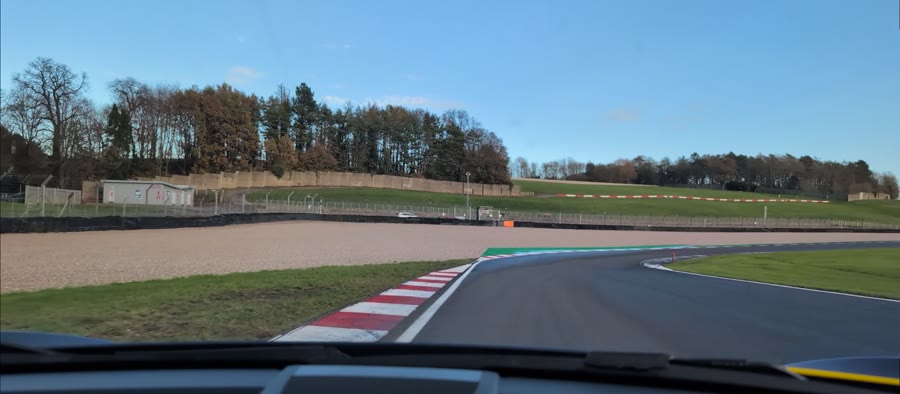 14:03Drier
The sessions with the cues off matter too. Four of our eight recorded sessions ran with the cues off. Mark had the first to himself. In the other three he and Jim coached out loud while the app recorded, so we have a real coach and the car’s data side by side.
- Cues off9:14Mark
on his own - Cues off9:59Jonathan
Mark coaching - Cues off10:36Jonathan
Mark coaching - Cues on11:04Jonathan
with Mark - Cues on11:43Mark
with Gareth - Cues on13:51Jonathan
with Mark - Cues off14:36Jonathan
Jim coaching - Cues on, screen only14:50Jonathan
with Jim
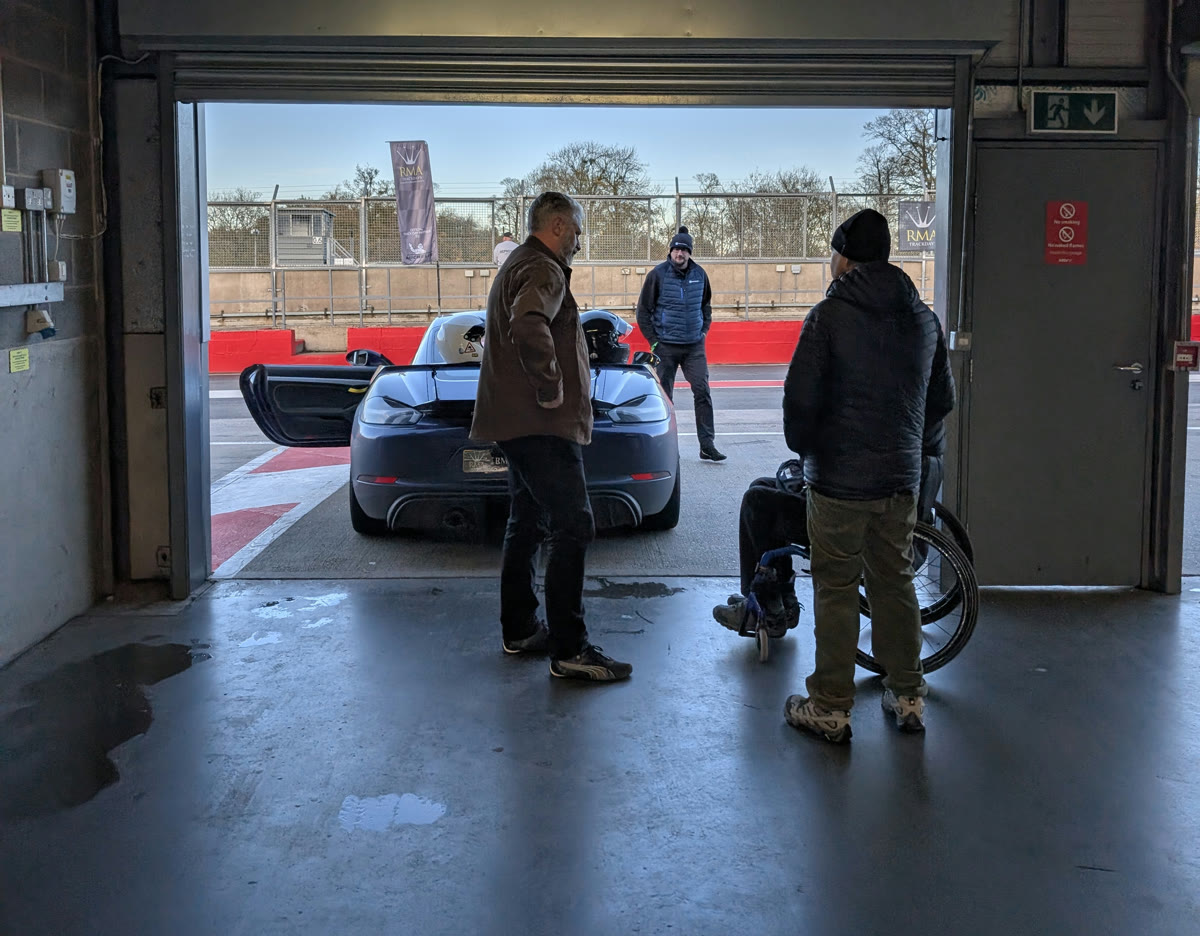
People want to know more. We met people in the paddock who had already heard of RaceLineApp and wanted to learn more about it.
Did it meet our expectations?
Yes. We ran live on the GP circuit, with good coaches and good friends there for the day.
An absolutely phenomenal day... I would say that was an A-plus day, A-plus people.
What’s next?
Here’s how we’re moving forward. We’re refining the cues from the day’s recordings. We’re also bringing in more positional briefing on the straights: a short line before the corner about where to put the car, while the driver still has time to take it in. And we’re introducing a target exit as a point in our circuit validation plan, to help bring the car out of each corner in the right place.
We’re testing on track right through the winter. We’re back at Donington on 12 December, where we’re going to be testing further updates, including our first iteration of the iOS version of the app, the Apple version.
We’d like to say a huge thank you to Mark and Jim for coaching, to Gareth for riding along and to Ivita for filming and photographing the day.
Quick answers
What is RaceLineApp.ai?
RaceLineApp.ai is live AI coaching for track day drivers. It tells you what to do in the moment, during the lap, with short spoken cues such as Brake, Turn in and Power, and nothing to read at speed. It is the world's first real-time AI race engineer.
When did RaceLineApp.ai test on the Donington Park GP circuit?
We ran a full test day on the Donington Park Grand Prix circuit, Castle Donington, Leicestershire, on Friday 20 November 2026, in a Porsche 718 Cayman GT4. It was our first day with live cues on the GP layout, after testing on the National circuit in October.
How do you hear the coaching?
You hear it through a Bluetooth earpiece or your helmet comms. At Donington we heard the cues through the car's speakers.
Is RaceLineApp.ai a lap timer?
No. RaceLineApp.ai records your laps, but it is not a lap timer. Its job is to coach you live while the lap is still happening.
Is it safe to be coached live on track?
The cues are advisory and the driver stays in charge. The app gives no cues in the pit lane, one tap silences everything, and it is for use on closed racing circuits only.
How can I try RaceLineApp.ai?
We're testing on track right through the winter. The next step is a closed beta day at Silverstone GP in spring 2027, where we test at scale with 50 drivers. You can register your interest on the beta page.
