
Driving in the wet
November is here and the circuits are cold and wet. Here's what rain does to grip, and what I tell drivers to change.
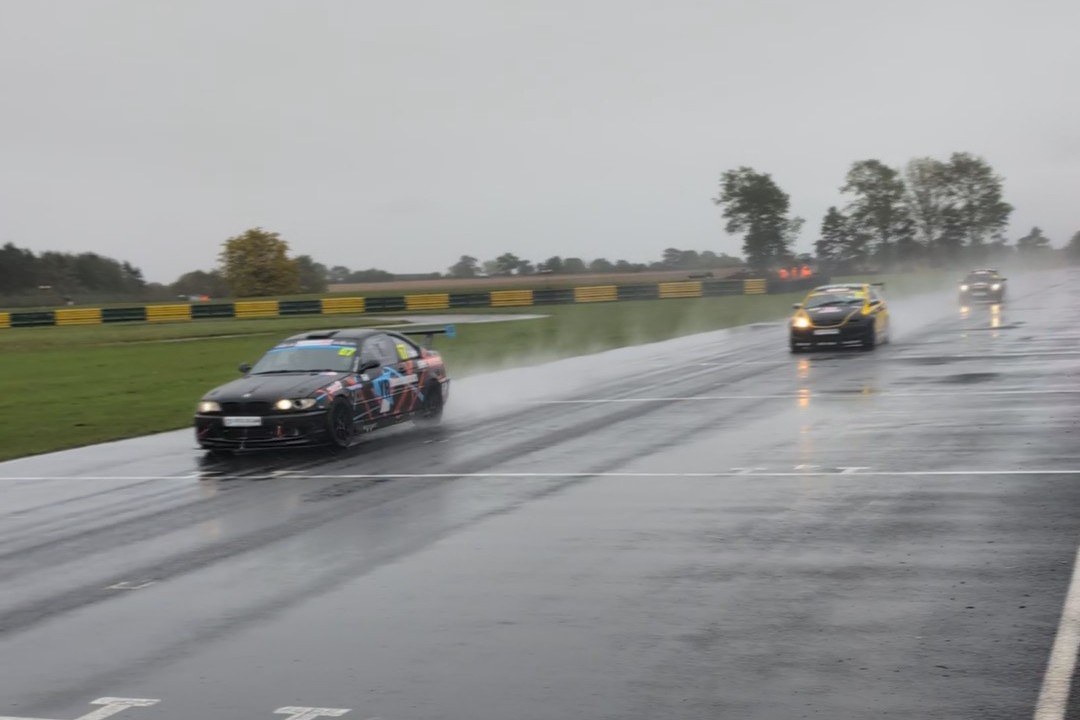
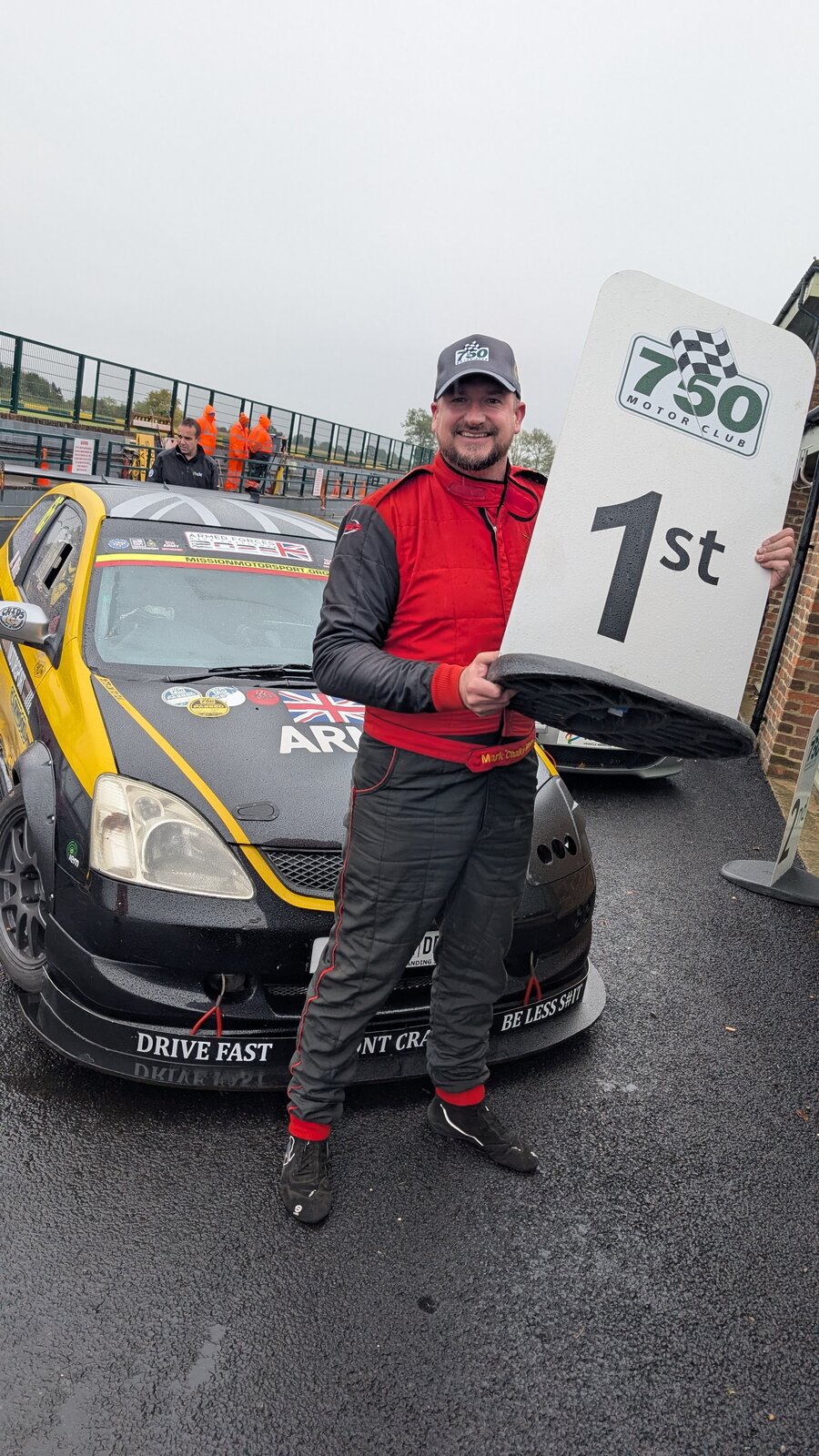
In September 2025 I won at Croft in pouring rain, and that race sealed the Armed Forces Race Challenge title for me.
November has arrived. The circuits are cold, the mornings are damp and most track days now start with a look at the sky. A lot of drivers sit the wet sessions out. I think that’s a missed opportunity. You learn more about driving at the limit in one wet session than in a whole dry day, because everything happens more slowly and the car tells you more.
Rain changes how you drive the whole lap: where you brake, where you turn in and where you put the power down. The braking is where most drivers get caught out, so that’s where I’ll start.
What rain does to grip
Grip is the friction between the tyre and the track. A film of water between them takes a big share of it away. On a properly wet track you can be left with less than half the grip you had in the dry.
Braking distance grows to match. The same stop can take twice the distance or more. A driver who keeps their summer braking point arrives at the corner far faster than they meant to.
The dry line is the slippery one
This is the part that surprises people. Over a season the racing line collects a layer of rubber and gets polished smooth by thousands of laps. In the dry that rubber gives extra grip. In the wet it turns the line into the most slippery part of the track. Track day regulars call it summer ice.
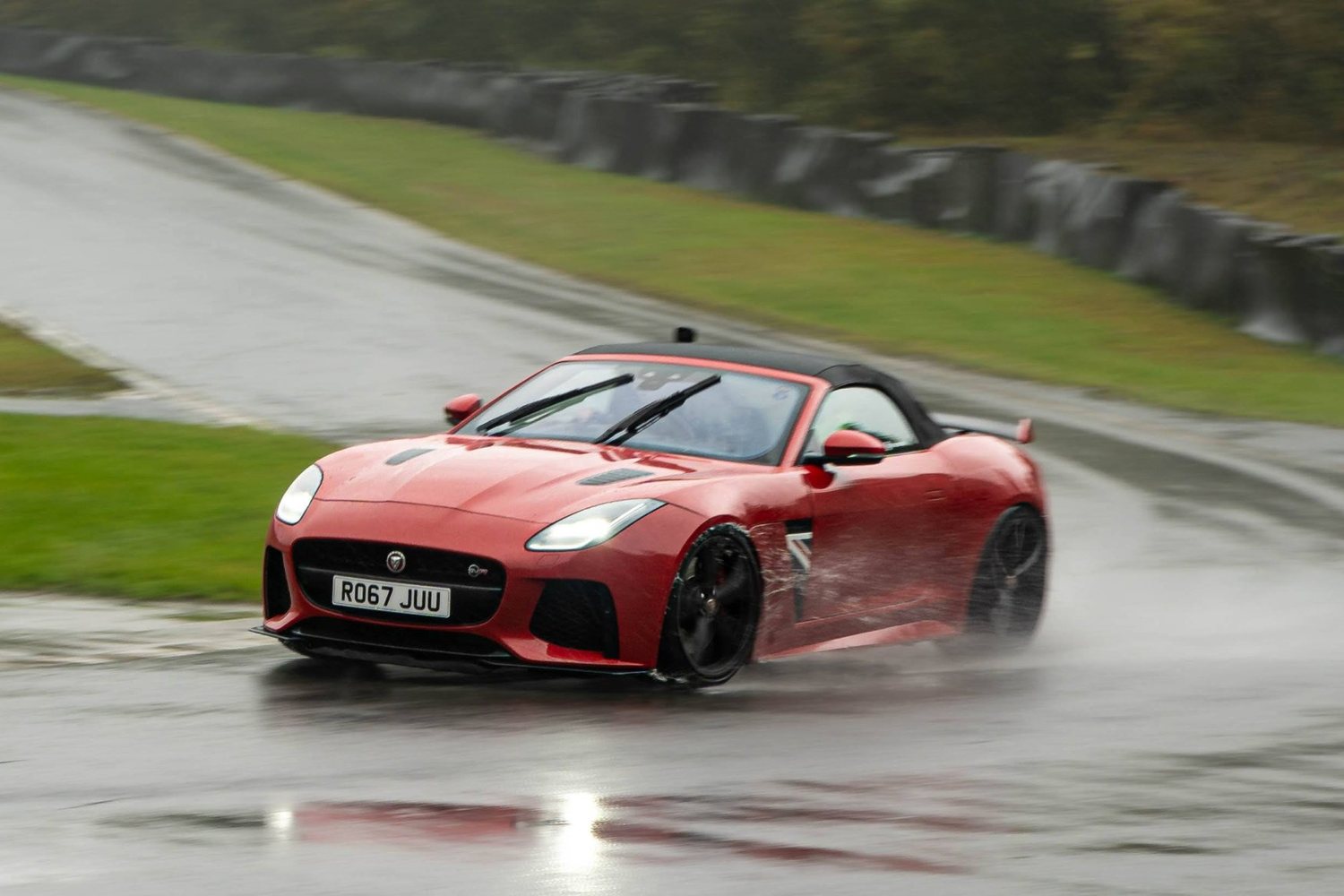
So in the rain I send drivers off the dry line. Brake on cleaner tarmac to one side of the usual braking line. Go a little deeper into the corner in a straight line and turn more sharply, which squares the corner off and points the car straight sooner. That matters because the exit is usually where you cross back onto the rubber, and you want the car straight when you do.
Be gentle with the steering too. The wider wet line needs less lock, and less lock asks less of the tyres. If the front starts to slide, adding more lock only adds to the slide. Unwind the steering a touch and let the front tyres find grip again.
It isn’t a fixed rule. A freshly resurfaced circuit may have almost no difference between the wet and dry lines. A track that dries during the day can swap back mid-session. The best wet drivers keep testing for grip lap after lap rather than assuming.
Smooth doesn’t mean soft
The advice everyone hears is to be smooth in the rain. That’s right, but it’s easy to take it to mean timid. A wet track still has grip. You just have less of it, and it runs out with less warning.
What changes is how the brake goes on and comes off. Squeeze the pedal on rather than stamping on it. Hold the pressure the grip allows. Release it gently, because letting go suddenly is one of the quickest ways to unsettle the car in the wet. Most tyres also lose more cornering grip than braking grip on a wet surface. That’s another reason to get more of the braking done in a straight line before you ask the car to turn.
In The science of trail braking we showed why carrying some brake into the turn is faster in the dry. In the wet I tell drivers to trail the brake more gently, or to do all of their braking in a straight line. Coaches don’t all agree on this, and the right answer depends on the car, the corner and how wet it is.
Less grip means less weight moving
Braking moves weight onto the front tyres. That extra load is what gives the front the grip to turn. How much weight moves depends on how hard the car is slowing down.
In our model of a Porsche 718 Cayman GT4, braking at 1 g in the dry moves about 270 kg onto the front axle. On a wet track the car can’t brake anywhere near that hard, so far less weight moves forward. The front tyres get less help at exactly the moment they have less grip to start with. That’s why a wet car pushes wide on turn-in so easily. We’ll look at weight transfer in more detail in our next article.
Braking downhill
Slopes change things again. Braking downhill, part of the car’s weight is pulling it down the hill, so it takes longer to stop. That pull is the same wet or dry. In the wet it comes out of a much smaller amount of grip, so it takes a far bigger share of your stopping power.
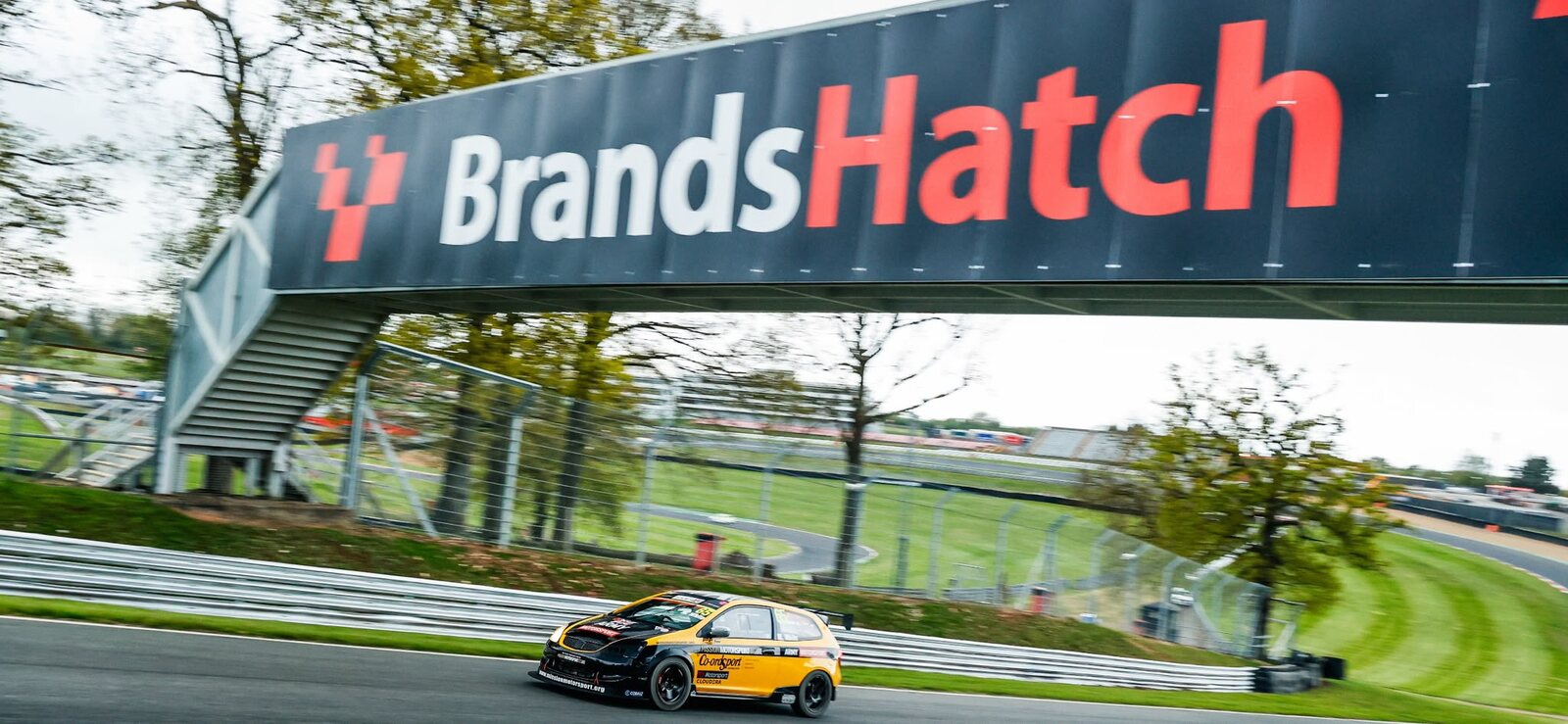
Paddock Hill Bend at Brands Hatch is the one I think of. You brake over a blind crest as the track drops away, so you’re still slowing the car while it’s heading downhill. It’s a hard corner in the dry and a very different one in the rain.
Get heat in, keep heat in
Tyres need heat to grip, and a cold, wet track keeps pulling it out of them. On the out-lap the tyres are at their coldest and the grip is lower than anywhere else in the session. Build up over the first few laps rather than going straight to your braking points.
Track tyres such as semi-slicks need more heat than road tyres to work properly. On a cold, wet November day they may never reach the temperature they were designed for. The heat goes quickly too. After a slow lap or a spell stuck behind traffic the tyres have cooled, so treat the next lap like another out-lap.
Kerbs, paint and standing water
Painted kerbs and white lines are much smoother than the tarmac around them. In the wet the water sits on top and they become some of the slipperiest surfaces on the circuit. Keep your tyres off them, especially while you’re braking or turning.
Standing water collects in the same places every time it rains, usually at the bottom of dips and along the edges of the track. Look for it on your first laps and remember where it is.
If it aquaplanes
Aquaplaning is when the tyres ride up on a film of water and lose contact with the track. The steering goes light and the revs can flare as the driven wheels spin up. Don’t brake and don’t turn the wheel. Ease off the throttle gently, hold the steering where it is and wait for the tyres to touch down again. When they do, you want them pointing where the car is going.
Driving in spray
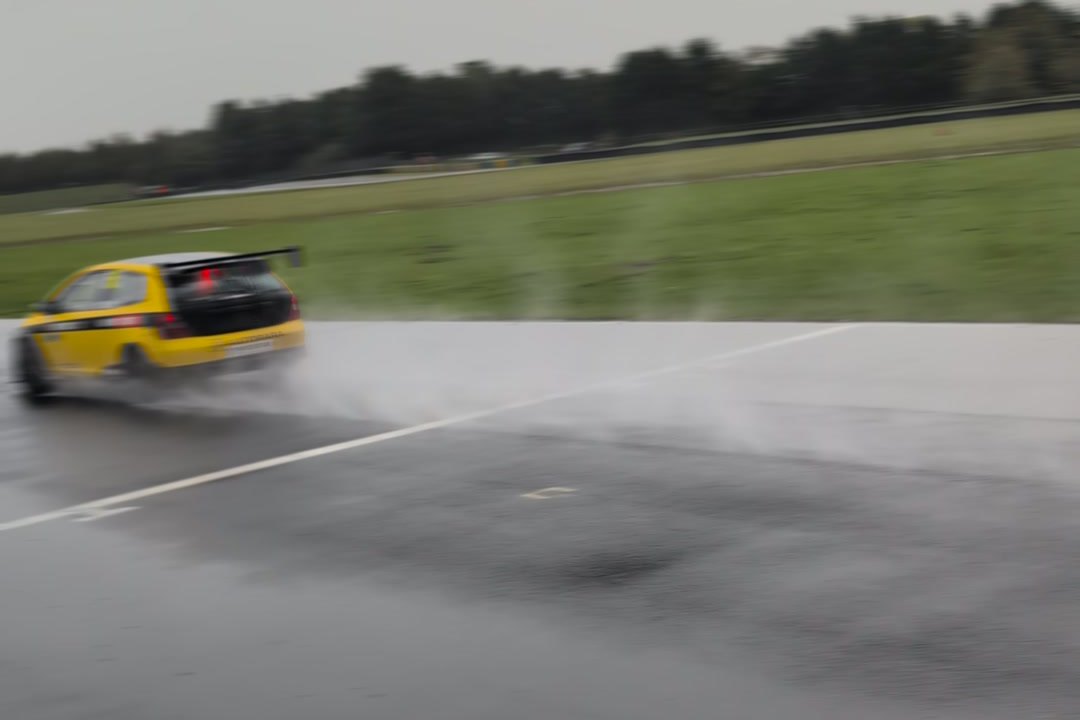
Spray from the car in front can wipe out your view of the braking zone. Pick braking references beside the track that you can still see above the spray, such as a marker board, a post or a bridge, rather than marks on the tarmac. Leave a bigger gap than you would in the dry. It gives you more to see and more room if the car ahead gets it wrong.
What RaceLineApp does with this
Before a session the driver tells RaceLineApp.ai whether the track is dry, damp or wet. The physics behind every brake call changes with it. On a wet track the brake call is designed to come earlier, timed for the grip that’s actually there rather than the grip you had in the summer.
We’re also building a track briefing into RaceLineApp. Before you go out, it’s designed to give you an estimate of how much rubber is down on the dry line, so you know how slippery it could be when it’s wet.
Next on our development board is the wet line itself. On a wet day with lots of drivers on track running RaceLineApp, the drivers who find grip soon start leaving the dry line for a different one. We’re researching how the app could recognise that pattern and use it to shape the calls for everyone else on track that day.
Until then, finding the wet line on the day is down to you. It changes from circuit to circuit and from hour to hour. That’s where an experienced coach in the passenger seat is worth every penny, and it’s why we build RaceLineApp to work alongside coaches rather than instead of them.
Come and see us at Donington
We’re testing RaceLineApp on the Donington Park GP circuit this Friday, 20 November. Whatever the weather does, it will be a proper test. If you’re booked on the day, come and find us in the paddock and see live coaching in action. We’ll be posting from the day on Instagram.
RaceLineApp is a coaching aid. Flags, marshals and the organiser’s briefing always come first, and the driver is responsible for every driving decision.
